









-Liberty Street Economics
Liberty Street Economics
Return to Liberty Street Economics Home Page

22 posts from May 2020

May 05, 2020

U.S. Consumer Debt Payments and Credit Buffers on the Eve of COVID-19


American Consumer Debt Payments and Credit Buffers on the Eve of COVID-19

Today, the New York Fed’s Center for Microeconomic Data released the Quarterly Report on Household Debt and Credit for 2020:Q1. Because consumer debt servicing statements are typically furnished to credit bureaus only once during every statement period, our snapshot of consumer credit reports as of March 31, 2020 is, in effect, largely a pre‑COVID‑19 view of the consumer balance sheet. While significant indications of the pandemic are yet to appear in our Consumer Credit Panel (CCP—the data source for the Quarterly Report, based on anonymized Equifax credit reports), we are able to observe the credit position of the American consumer just as the pandemic and associated lockdowns struck the United States.

Continue reading "U.S. Consumer Debt Payments and Credit Buffers on the Eve of COVID-19" »

Posted by Blog Author at 11:00 AM in Household Finance | Permalink | Comments (0)

May 04, 2020

W(h)ither U.S. Crude Oil Production?


W(h)ither U.S. Crude Oil Production?

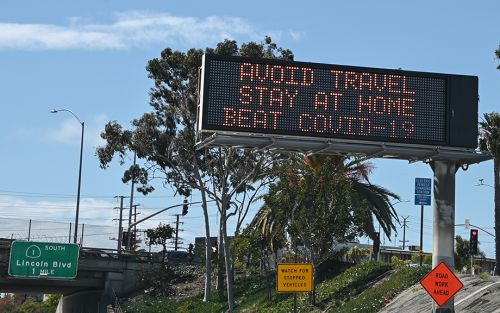
People across the world have cut back sharply on travel due to the Covid-19 pandemic, working from home and cancelling vacations and other nonessential travel. Industrial activity is also off sharply. These forces are translating into an unprecedented collapse in global oil demand. The nature of the decline means that demand is unlikely to respond to the steep drop in oil prices, so supply will have to fall in tandem. The rapid increase in U.S. oil production of recent years was already looking difficult to sustain before the pandemic, as evidenced by the limited profitability of the sector. Now, U.S. producers may have to bear the brunt of the global supply adjustment needed over the near term.

Continue reading "W(h)ither U.S. Crude Oil Production?" »

Posted by Blog Author at 7:00 AM in Financial Markets, Macroecon, Pandemic | Permalink | Comments (0)

About the Blog
Liberty Street Economics features insight and analysis from New York Fed economists working at the intersection of research and policy. Launched in 2011, the blog takes its name from the Bank’s headquarters at 33 Liberty Street in Manhattan’s Financial District.

The editors are Michael Fleming, Andrew Haughwout, Thomas Klitgaard, and Asani Sarkar, all economists in the Bank’s Research Group.

Liberty Street Economics does not publish new posts during the blackout periods surrounding Federal Open Market Committee meetings.

The views expressed are those of the authors, and do not necessarily reflect the position of the New York Fed or the Federal Reserve System.


Economic Research Tracker

Liberty Street Economics is now available on the iPhone® and iPad® and can be customized by economic research topic or economist.


Most Viewed

Last 12 Months
Useful Links
Comment Guidelines
We encourage your comments and queries on our posts and will publish them (below the post) subject to the following guidelines:
Please be brief: Comments are limited to 1500 characters.
Please be quick: Comments submitted after COB on Friday will not be published until Monday morning.
Please be aware: Comments submitted shortly before or during the FOMC blackout may not be published until after the blackout.
Please be on-topic and patient: Comments are moderated and will not appear until they have been reviewed to ensure that they are substantive and clearly related to the topic of the post. We reserve the right not to post any comment, and will not post comments that are abusive, harassing, obscene, or commercial in nature. No notice will be given regarding whether a submission will or will not be posted.‎
Disclosure Policy
The LSE editors ask authors submitting a post to the blog to confirm that they have no conflicts of interest as defined by the American Economic Association in its Disclosure Policy. If an author has sources of financial support or other interests that could be perceived as influencing the research presented in the post, we disclose that fact in a statement prepared by the author and appended to the author information at the end of the post. If the author has no such interests to disclose, no statement is provided. Note, however, that we do indicate in all cases if a data vendor or other party has a right to review a post.
Archives
