










187 posts on "Banks"
April 6, 2016
Bank Regulation and Bank Complexity
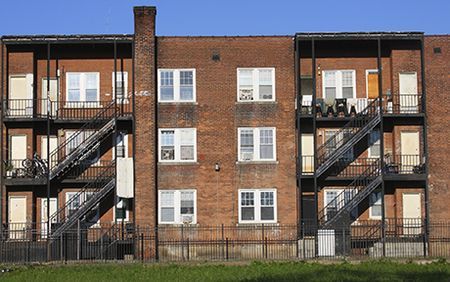
U.S. Bank Holding Companies (BHCs) currently control about 3,000 subsidiaries that provide community housing services—such as building low-income housing units, maintaining shelters, and providing housing services to the elderly and disabled.
March 7, 2016
Banking Deserts, Branch Closings, and Soft Information
U.S. banks have shuttered nearly 5,000 branches since the financial crisis, raising concerns that more low-income and minority neighborhoods may be devolving into “banking deserts” with inadequate, or no, mainstream financial services.
Posted at 7:00 am in Banks, Crisis, Financial Institutions, Household Finance, Regulation | Permalink
November 30, 2015
U.S. Banks’ Changing Footprint at Home and Abroad

Linda Goldberg and Rose Wang investigate changes in bank holding company (BHC) geography, especially the rising share of BHC affiliates in tax havens and financial secrecy jurisdictions.
October 2, 2015
Crisis Chronicles: Defensive Suspension and the Panic of 1857
Sometimes the world loses its bearings and the best alternative is a timeout.
September 28, 2015
Same Name, New Businesses: Evolution in the Bank Holding Company
When we think of banks, we typically have in mind our local bank branch that stores deposits and issues mortgages or business loans.
June 22, 2015
Becoming a Large Bank? It’s Not Easy
Rajlakshmi De and Hamid Mehran Size is usually seen as the leading indication of the costs that a bank failure would impose on society. As a result, the Dodd-Frank Act of 2010 requires banks to have adequate capital and liquidity to mitigate default risk and imposes additional requirements on larger banks to enhance their safety. […]
February 11, 2015
Available for Sale? Understanding Bank Securities Portfolios
It’s natural to think of banks as intermediaries that take in deposits and use them to make loans to businesses and individuals.
January 5, 2015
Worker Flows in Banking Regulation
In the aftermath of the 2008 financial crisis, job transitions of personnel in banking supervision and regulation between the public and private sectors—often labeled the revolving door—have come under intense scrutiny and have been blamed by certain economists (Johnson and Kwak), legal scholars (John Coffee in the Financial Times), and policymakers (Dodd-Frank Act of 2010, Section 968) for distorting regulators’ actions in favor of banks.
October 15, 2014
How Do Liquidity Conditions Affect U.S. Bank Lending?
he recent financial crisis underscored the importance of understanding how liquidity conditions for banks (or other financial institutions) influence the banks’ lending to domestic and foreign customers.
October 1, 2014
Cross‑Country Evidence on Transmission of Liquidity Risk through Global Banks
Over the past thirty years, the typical large bank has become a global entity with subsidiaries in many countries.
Posted at 7:00 am in Banks, Euro Area, Financial Institutions, Financial Markets, International Economics, Liquidity | Permalink
 RSS Feed
 Follow Liberty Street Economics
