










187 posts on "Banks"
November 13, 2019
The Side Effects of Shadow Banking on Liquidity Provision

Over the past two decades, the growth of shadow banking has transformed the way the U.S. banking system funds corporations. In this post, we describe how this growth has affected both the term loan and credit line businesses, and how the changes have resulted in a reduction in the liquidity insurance provided to firms.
September 23, 2019
Once Upon a Time in the Banking Sector: Historical Insights into Banking Competition

How does competition among banks affect credit growth and real economic growth? In addition, how does it affect financial stability? In this blog post, we derive insights into this important set of questions from novel data on the U.S. banking system during the nineteenth century.
Posted at 7:00 am in Banks, Crisis, Economic History, Financial Institutions, Financial Intermediation | Permalink
July 17, 2019
How Do Large Banks Manage Their Cash?

As the aggregate supply of reserves shrinks and large banks implement liquidity regulations, they may follow a variety of liquidity management strategies depending on their business models and the interest rate differences between alternative liquid instruments. For example, the banks may continue to hold large amounts of excess reserves or shift to Treasury or agency securities or shrink their balance sheets. In this post, we provide new evidence on how large banks have managed their cash, which is the largest component of reserves, on a daily basis since the implementation of liquidity regulations.
Posted at 7:00 am in Banks, Federal Reserve, Liquidity, Regulation, Repo, Treasury | Permalink | Comments (2)
July 15, 2019
Large Bank Cash Balances and Liquidity Regulations

Jeffrey Levine and Asani Sarkar discuss the recent evolution of large bank cash balances, the effect of liquidity regulations on these balances, and how banks might react to the Federal Reserve’s changes in the supply of reserves.
July 8, 2019
From Policy Rates to Market Rates—Untangling the U.S. Dollar Funding Market

How do changes in the rate that the Federal Reserve pays on reserves held by depository institutions affect rates in money markets in which the Fed does not participate? Through which channels do changes in the so-called administered rates reach rates in onshore and offshore U.S. dollar money markets? In this post, we answer these questions with the help of an interactive map that guides us through the web of interconnected relationships between the Fed, key market players, and the various instruments in the U.S. dollar funding market, highlighting the linkages across the short-term financial products that form this market.
Posted at 7:00 am in Banks, Central Bank, Fed Funds, Federal Reserve, Monetary Policy, Repo | Permalink | Comments (5)
June 26, 2019
How Large Are Default Spillovers in the U.S. Financial System?

When a financial firm suffers sufficiently high losses, it might default on its counterparties, who may in turn become unable to pay their own creditors, and so on. This “domino” or “cascade” effect can quickly propagate through the financial system, creating undesirable spillovers and unnecessary defaults. In this post, we use the framework that we discussed in “Assessing Contagion Risk in a Financial Network,” the first part of this two-part series, to answer the question: How vulnerable is the U.S. financial system to default spillovers?
Posted at 7:00 am in Banks, Crisis, Financial Institutions, Financial Intermediation, Systemic Risk | Permalink | Comments (1)
May 29, 2019
Is There Too Much Business Debt?

Anna Kovner and Brandon Zborowski By many measures nonfinancial corporate debt has been increasing as a share of GDP and assets since 2010. As the May Federal Reserve Financial Stability Report explained, high business debt can be a financial stability risk because heavily indebted corporations may need to cut back spending more sharply when shocks […]
Posted at 7:00 am in Banks, Corporate Finance, Credit, Financial Intermediation | Permalink | Comments (10)
May 17, 2019
Understanding Cyber Risk: Lessons from a Recent Fed Workshop

Cyber risk poses a major threat to financial stability, yet financial institutions still lack consensus on the definition and terminology around cyber risk, and lack a common framework for confronting these hazards. This impedes efforts to measure and manage such risk, diminishing institutions’ individual and collective readiness to handle system-level cyber threats. In this blog post, we describe the proceedings of a recent workshop, where leading risk managers, academics, and policy makers gathered to discuss proposals for countering cyber risk. This workshop is part of a joint two-phase initiative between the Federal Reserve Banks of Richmond and New York and the Fed’s Board of Governors to harmonize cyber risk identification, classification, and measurement practices.
May 8, 2019
Ten Years Later—Did QE Work?
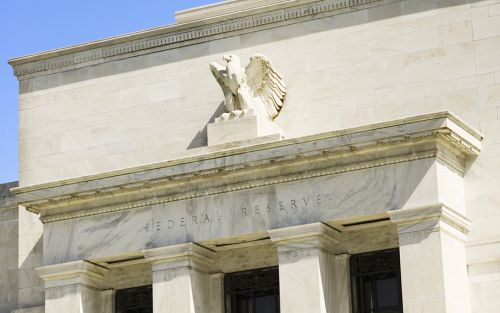
By November 2008, the Global Financial Crisis, which originated in the residential housing market and the shadow banking system, had begun to turn into a major recession, spurring the Federal Open Market Committee (FOMC) to initiate what we now refer to as quantitative easing (QE). In this blog post, we draw upon the empirical findings of post-crisis academic research–including our own work–to shed light on the question: Did QE work?
Posted at 7:00 am in Banks, Central Bank, Employment, Financial Markets, Monetary Policy | Permalink | Comments (7)
March 25, 2019
Deciphering Americans’ Views on Cryptocurrencies

Having witnessed the dramatic rise and fall in the value of cryptocurrencies over the past year, we wanted to learn more about what motivates people to participate in this market. To find out, we included a special set of questions in the May 2018 Survey of Consumer Expectations, a project of the New York Fed’s Center for Microeconomic Data. This blog post summarizes the results of that survey, shedding light on U.S. consumers’ depth of participation in cryptocurrencies and their motives for entering this new market.
Posted at 7:00 am in Banks, Credit, Cryptocurrencies, Financial Institutions, Financial Markets, Monetary Policy | Permalink
 RSS Feed
 Follow Liberty Street Economics
