










170 posts on "International Economics"
October 22, 2018
Tax Reform and U.S. Effective Profit Taxes: From Low to Lower

The Tax Cut and Jobs Act (TCJA) reduced the federal corporate profit tax rate from 35 percent to 21 percent. Adding in state profit taxes, the overall U.S. tax rate went from 39 percent, one of the highest rates in the world, to 26 percent, about the average rate abroad. The implications of the new law for U.S. competitiveness depend on how these statutory tax rates compare with the actual rates faced by U.S. and foreign companies. To address this question, this post presents new evidence on tax payments as a share of profits, as well as analytical measures of tax impacts on profitability. We find that the U.S. effective tax rate was already below the average rate abroad prior to the enactment of the TCJA, and that it is now well below the rate in most countries.
August 13, 2018
Do Import Tariffs Help Reduce Trade Deficits?

Import tariffs are on the rise in the United States, with a long list of new tariffs imposed in the last few months—25 percent on steel imports, 10 percent on aluminum, and 25 percent on $50 billion of goods from China—and possibly more to come on China and the auto industry. One of the objectives of these new tariffs is to reduce the U.S. trade deficit, which stood at $568.4 billion in 2017 (2.9 percent of GDP). The fact that the United States imports far more than it exports is viewed by some as unfair, so the idea is to try to reduce the amount that the nation imports from the rest of the world. While more costly imports are likely to reduce the quantity and value of imports into the United States, the story does not stop there, because we cannot presume that the value of exports will remain unchanged. In this post, we argue that U.S. exports will also fall, not only because of other countries’ retaliatory tariffs on U.S. exports, but also because the costs for U.S. firms producing goods for export will rise and make U.S. exports less competitive on the world market. The end result is likely to be lower imports and lower exports, with little improvement in the trade deficit.
July 20, 2018
The Transatlantic Economy Ten Years after the Crisis: Macro‑Financial Scenarios and Policy Responses

“The Transatlantic Economy Ten Years after the Crisis: Macro-Financial Scenarios and Policy Response,” was the focus of a conference, jointly organized by the New York Fed, the European Commission, and the Centre for Economic Policy Research in April 2018. These three institutions had previously collaborated on a series of events related to transatlantic economic relations, including a workshop in April 2014 and a conference in April 2016. Ten years after the global financial crisis, this conference came at a crucial time in the history of the relationship between the United States and the European Union, and provided an opportunity to revisit and assess recent policy responses. A number of questions were addressed by the panelists: Is the world economy back on a sustainable growth path or have we entered a secular stagnation era with persistently low interest rates and inflation? How large are the spillovers of monetary and fiscal policies? Have we done enough to maintain financial stability and deal with cross border resolution issues, which have been one of the most vexing topics in the regulatory space?
May 30, 2018
Good News, Leverage, and Sudden Stops

One of the major debates in open economy macroeconomics is the extent to which capital inflows are beneficial for growth. In principle, these flows allow countries to increase their consumption and investment spending beyond their income by enabling them to tap into foreign saving. Periods of such borrowing, however, are associated with large trade deficits, external debt accumulation, and, in some cases, overheating when these economies operate beyond their potential output level for an extended period of time. The relevant question in this context is whether the rate at which a country is taking on external debt has useful predictive information about financial crises.
Posted at 7:00 am in Balance of Payments, International Economics, Macroeconomics, Systemic Risk | Permalink
April 19, 2018
Will New Steel Tariffs Protect U.S. Jobs?

President Trump announced a new tariff of 25 percent on steel imports and 10 percent on aluminum imports on March 8, 2018. One objective of these tariffs is to protect jobs in the U.S. steel industry. They were introduced under a rarely used 1962 Act, which allows the government to impose trade barriers for national security reasons. Although the tariffs were initially thought to apply to all trading partners, Canada and Mexico are currently exempt subject to NAFTA negotiations, and implementation of the tariffs for the European Union, Argentina, Australia, and Brazil has been paused. South Korea has received a permanent exemption from the steel tariffs and will instead by subject to a quota of 70 percent of its current average steel exports to the U.S. In this post, we consider how the steel tariffs could affect U.S. trade and employment. We focus on steel since the steel industry employs about three times as many workers as the aluminum industry, although qualitatively our conclusions apply to both. We argue that the new tariffs are likely to lead to a net loss in U.S. employment, at least in the short to medium run.
February 22, 2018
Just Released: Puerto Rico and the U.S. Virgin Islands after Hurricanes Irma and Maria

An examination of the fallout from Hurricanes Irma and Maria on the economies of Puerto Rico and the U.S. Virgin Islands was the focus of an economic press briefing today at the New York Fed. Both U.S. territories were suffering from significant economic downturns and fiscal stress well before the storms hit in September 2017, raising concerns about their paths to recovery.
Posted at 10:17 am in Crisis, Human Capital, International Economics, Puerto Rico, Regional Analysis | Permalink
February 21, 2018
The Evolution of Mexico’s Merchandise Trade Balance

Mexico runs a trade surplus with the United States owing to oil exports and cross-border supply chains, with imported U.S. components assembled in Mexico and then exported back to the United States. At the same time, Mexico runs a large trade deficit with Asia, the result of a surge of imports from that region over the past two decades. From Mexico’s perspective, this growing deficit with Asia has worked to offset an increasing trade surplus with the United States. More recently, the country’s merchandise balance suffered a substantial deterioration with the collapse of petroleum prices in late 2014. The balance has subsequently staged a modest recovery, as Mexico’s demand for Asian goods has cooled while the surplus with the United States (excluding petroleum trade) continues to trend higher. These developments have helped Mexico reduce its need to borrow more from the world to make up for lost petroleum export revenues.
January 17, 2018
Did Import Competition Boost Household Debt Demand?
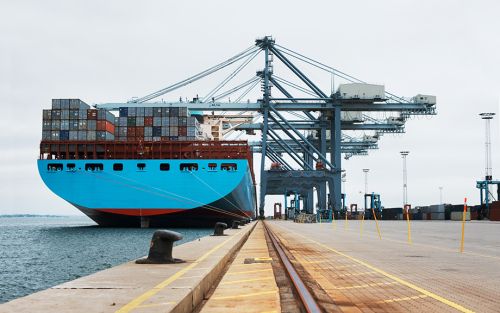
In the years preceding the Great Recession, the United States experienced a dramatic rise in household debt and an unprecedented increase in import competition. In a recent staff report, we outline a link between these two seemingly unrelated phenomena. We argue that the displacement of workers exposed to import competition fueled their demand for mortgage credit, which left many households more vulnerable to the eventual downturn in the housing market.
September 6, 2017
What Drives International Bank Credit?
A major question facing policymakers is how to deal with slumps in bank credit.
Posted at 7:00 am in Bank Capital, Banks, Credit, Crisis, Financial Markets, International Economics | Permalink
April 19, 2017
Is Chinese Growth Overstated?

For analysts of the Chinese economy, questions about the accuracy of the country’s official GDP data are a frequent source of angst, leading many to seek guidance from alternative indicators.
 RSS Feed
 Follow Liberty Street Economics
