









393 posts on "Liberty Street Economics"
February 16, 2022
The Making of Fallen Angels—and What QE and Credit Rating Agencies Have to Do with It

Riskier firms typically borrow at higher rates than safer firms because investors require compensation for taking on more risk. However, since 2009 this relationship has been turned on its head in the massive BBB corporate bond market, with risky BBB-rated firms borrowing at lower rates than their safer BBB-rated peers. The resulting risk materialized in an unprecedented wave of “fallen angels” (or firms downgraded below the BBB investment-grade threshold) at the onset of the COVID-19 pandemic. In this post, based on a related Staff Report, we claim that this anomaly has been driven by a combination of factors: a boost in investor demand for investment-grade bonds associated with the Federal Reserve’s quantitative easing (QE) and sluggish adjustment of credit ratings for risky BBB issuers.
February 14, 2022
What Are Consumers’ Inflation Expectations Telling Us Today?

The United States has experienced a considerable rise in inflation over the past year. In this post, we examine how consumers’ inflation expectations have responded to inflation during the pandemic period and to what extent this is different from the behavior of consumers’ expectations before the pandemic. We analyze two aspects of the response of consumers’ expectations to changing conditions. First, we examine by how much consumers revise their inflation expectations in response to inflation surprises. Second, we look at the pass-through of revisions in short-term inflation expectations to revisions in longer-term inflation expectations. We use data from the New York Fed’s Survey of Consumer Expectations (SCE) and from the Michigan Survey of Consumers to measure these responses. We find that over the past two years, consumers’ shorter-horizon expectations have been highly attuned to current inflation news: one-year-ahead inflation expectations are very responsive to inflation surprises, in a pattern similar to what we witnessed before the pandemic. In contrast, three-year-ahead inflation expectations are now far less responsive to inflation surprises than they were before the pandemic, indicating that consumers are taking less signal from the recent movements in inflation about inflation at longer horizons than they did before. We also find that the pass-through from revisions in one-year-ahead expectations to revisions in longer-term expectations has declined during the pandemic relative to the pre-pandemic period. Taken together, these findings show that consumers expect inflation to behave very differently than it did before the pandemic, with a smaller share of short-term movements in inflation expected to persist into the future.
February 8, 2022
Car Prices Drive Up Borrowing

Total household debt increased substantially during the second year of the COVID-19 pandemic, with a $1.02 trillion increase in aggregate debt balances, according to the Quarterly Report on Household Debt and Credit for the fourth quarter of 2021 from the New York Fed’s Center for Microeconomic Data. The yearly increase was the largest seen since 2007 in nominal terms and was boosted by particularly robust growth in mortgage balances, which grew by nearly $900 billion through 2021. Credit card balances, which have followed an unusual path during the pandemic, saw a large seasonal increase in the fourth quarter but remain well below pre-pandemic levels. And student loan balances increased only modestly through 2021 due to lower enrollment and also due to administrative forbearance on federal student loans—the smallest annual increase we’ve seen since 2004. Outstanding auto loan balances grew in 2021 by $84 billion. The $734 billion in newly opened auto loans through the year was the largest volume we’ve seen in our data.
February 7, 2022
The Future of Payments Is Not Stablecoins
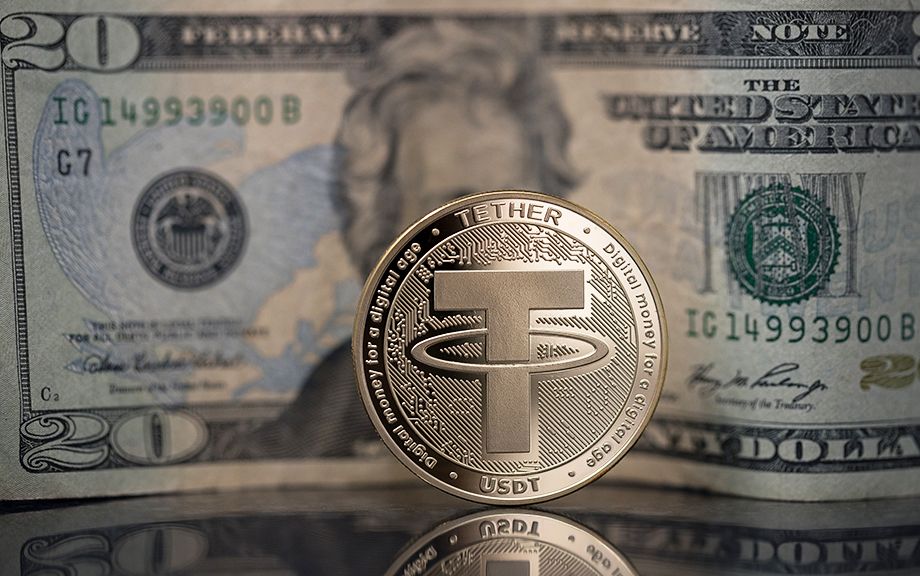
Stablecoins, which we define as digital assets used as a medium of exchange that are purported to be backed by assets held specifically for that purpose, have grown considerably in the last two years. They rose from a market capitalization of $5.7 billion on December 1, 2019, to $155.6 billion on January 21, 2022. Moreover, a market that was once dominated by a single stablecoin—Tether (USDT)—now boasts five stablecoins with valuations over $1 billion (as of January 21, 2022; data about the supply of stablecoins can be found here). Analysts have started to pay increased attention to the stablecoin market, and the President’s Working Group (PWG) on Financial Markets released a report on stablecoins on November 1, 2021. In this post, we explain why we believe stablecoins are unlikely to be the future of payments.
February 2, 2022
Housing Returns in Big and Small Cities

Houses are the largest asset for most households in the United States, as is the case in many other countries as well. Within countries, there is substantial regional variation in house prices—compare real estate values in Manhattan, New York City, with those in Manhattan, Kansas, for example. But what about returns on investment? Are long-run returns on real estate investment—the sum of price appreciation and rental income flows—higher in superstar cities like New York than in the rest of the country? In this blog post, we present new and potentially surprising insights from research comparing long-run returns on residential real estate in a nation’s largest cities to those experienced in the rest of the country (Amaral et al., 2021), covering the U.S. and fourteen other advanced economies over the past century.
January 31, 2022
Pricing Liquidity without Preemptive Runs

Prime money market funds (MMFs) are vulnerable to runs. This was dramatically illustrated in September 2008 and March 2020, when massive outflows from prime MMFs worsened stress in the short-term funding markets and eased only after taxpayer-supported interventions by the Treasury and the Federal Reserve. In this post, we describe how mechanisms like swing pricing that charge a price for liquidity can reduce the vulnerability of prime MMFs without triggering preemptive runs.
January 28, 2022
The Global Supply Side of Inflationary Pressures

U.S. inflation has surged as the economy recovers from the COVID-19 recession. This phenomenon has not been confined to the U.S. economy, as similar inflationary pressures have emerged in other advanced economies albeit not with the same intensity. In this post, we draw from the current international experiences to provide an assessment of the drivers of U.S. inflation. In particular, we exploit the link among different measures of inflation at the country level and a number of global supply side variables to uncover which common cross-country forces have been driving observed inflation. Our main finding is that global supply factors are very strongly associated with recent producer price index (PPI) inflation across countries, as well as with consumer price index (CPI) goods inflation, both historically and during the recent bout of inflation acceleration.
January 13, 2022
The Fed’s Latest Tool: A Standing Repo Facility
In July 2021, the Federal Open Market Committee announced a new tool for monetary policy implementation: a domestic standing repurchase agreement facility. In the last post of this series, we explain what this new tool is and how it will support the effective implementation of monetary policy in the floor system through which the Fed implements policy.
January 12, 2022
How the Fed Adjusts the Fed Funds Rate within Its Target Range
At its June 2021 meeting, the FOMC maintained its target range for the fed funds rate at 0 to 25 basis points, while two of the Federal Reserve’s administered rates—interest on reserve balances and the overnight reverse repo (ON RRP) facility offering rate—each were increased by 5 basis points. What do these two simultaneous decisions mean? In today’s post, we look at “technical adjustments”—a tool the Fed can deploy to keep the FOMC’s policy rate well within the target range and support smooth market functioning.
January 11, 2022
How the Fed’s Overnight Reverse Repo Facility Works
Daily take-up at the overnight reverse repo (ON RRP) facility increased from less than $1 billion in early March 2021 to just under $2 trillion on December 31, 2021. In the second post in this series, we take a closer look at this important tool in the Federal Reserve’s monetary policy implementation framework and discuss the factors behind the recent increase in volume.
Posted at 7:00 am in Bank Capital, Banks, Central Bank, COVID-19 Facilities, Credit, Crisis, Fed Funds, Federal Reserve, Financial Institutions, Monetary Policy, Pandemic, Repo | Permalink
 RSS Feed
 Follow Liberty Street Economics