










393 posts on "Liberty Street Economics"
January 10, 2022
How the Federal Reserve’s Monetary Policy Implementation Framework Has Evolved

In a series of four posts, we review key elements of the Federal Reserve’s monetary policy implementation framework. The framework has changed markedly in the last two decades. Prior to the global financial crisis, the Fed used a system of scarce reserves and fine-tuned the supply of reserves to maintain rate control. However, since then, the Fed has operated in a floor system, where active management of the supply of reserves no longer plays a role in rate control, but rather the Fed’s administered rates influence the federal funds rate. In this first post, we discuss the salient features of the implementation framework in a stylized way.
Posted at 7:00 am in Central Bank, Fed Funds, Federal Reserve, Monetary Policy | Permalink | Comments (1)
January 7, 2022
The Effect of Inequality on the Transmission of Monetary and Fiscal Policy
Monetary policy can have a meaningful impact on inequality, as recent theoretical and empirical studies suggest. In light of this, how should policy be conducted? And how does inequality affect the transmission of monetary policy? These are the topics covered in the second part of the recent symposium on “Heterogeneity in Macroeconomics: Implications for Policy,” hosted by the new Applied Macroeconomics and Econometrics Center (AMEC) of the New York Fed on November 12.
Posted at 7:00 am in Equitable Growth, Fiscal Policy, Inequality, Macroeconomics, Monetary Policy | Permalink
January 6, 2022
The Effect of Monetary and Fiscal Policy on Inequality
How does accounting for households’ heterogeneity—and in particular inequality in income and wealth—change our approach to macroeconomics? What are the effects of monetary and fiscal policy on inequality, and what did we learn in this regard from the COVID-19 pandemic? What are the implications of inequality for the transmission of monetary policy, and its ability to stabilize the economy? These are some of the questions that were debated at a recent symposium on “Heterogeneity in Macroeconomics: Implications for Policy” organized by the new Applied Macroeconomics and Econometrics Center (AMEC) of the New York Fed on November 12.
Posted at 7:00 am in Equitable Growth, Inequality, Monetary Policy, Pandemic, Unemployment | Permalink
January 4, 2022
A New Barometer of Global Supply Chain Pressures

Supply chain disruptions have become a major challenge for the global economy since the start of the COVID-19 pandemic. Factory shutdowns (particularly in Asia) and widespread lockdowns and mobility restrictions have resulted in disruptions across logistics networks, increases in shipping costs, and longer delivery times. Several measures have been used to gauge these disruptions, although those measures tend to focus on selected dimensions of global supply chains. In this post, we propose a new gauge, the Global Supply Chain Pressure Index (GSCPI), which integrates a number of commonly used metrics with an aim to provide a more comprehensive summary of potential disruptions affecting global supply chains.
Posted at 7:00 am in Inflation, International Economics, Macroeconomics, Pandemic, Supply Chain | Permalink | Comments (14)
January 3, 2022
When Will U.S. Exports Take Off?
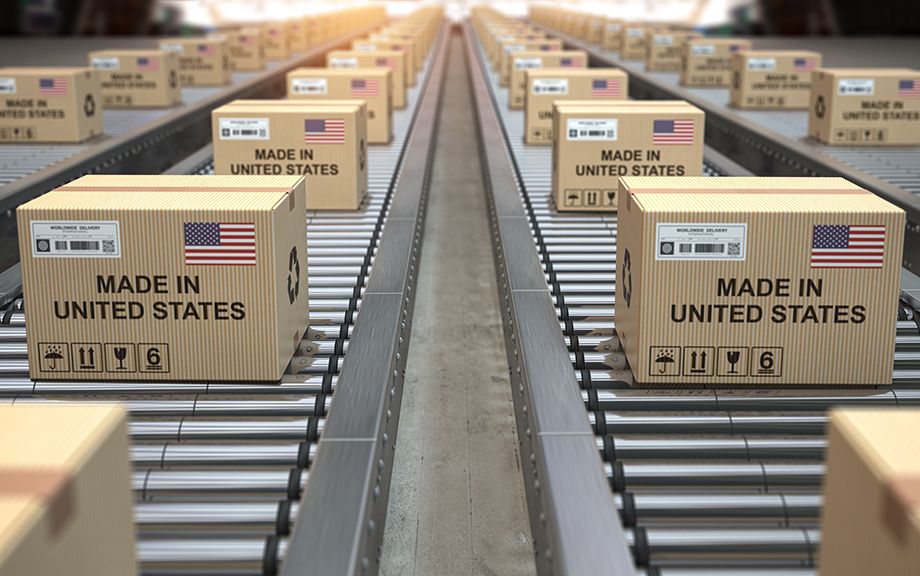
The economic recovery from the COVID-19 pandemic has been uneven across countries and sectors. While U.S. imports have rebounded to surpass their level before the collapse in 2020, U.S. exports remain far below their pre-pandemic level. This asymmetry in part reflects the different sectoral compositions of imports and exports. U.S. imports are driven by goods trade, while exports rely more heavily on services trade. A key component of services exports is foreign travel to the United States, which has dried up due to the suspension of nonessential travel imposed in March 2020. However, U.S. exports may now be at a turning point given the reopening of U.S. borders to all vaccinated travelers on November 8. We analyze the trajectory of U.S. services and how the lifting of the travel ban might contribute to the rebound of U.S. services exports.
Posted at 7:00 am in Balance of Payments, Exports, International Economics, Macroeconomics, Pandemic | Permalink
November 17, 2021
Uneven Distribution of Household Debt by Gender, Race, and Education
Household debt has risen markedly since 2013 and amounts to more than $15 trillion dollars. While the aggregate volume of household debt has been well-documented, literature on the gender, racial and education distribution of debt is lacking, largely because of an absence of adequate data that combine debt, demographic, and education information. In a three-part series beginning with this post, we seek to bridge this gap. In this first post, we focus on differences in debt holding behavior across race and gender. Specifically, we explore gender and racial disparities in different types of household debt and delinquencies—for auto, mortgage, credit card, and student loans—while distinguishing between students pursuing associate’s (AA) and bachelor’s (BA) degrees. In the second post in this series, we investigate gender and racial disparities in delinquencies across these various kinds of consumer debt. We close with a third post where we try to understand some of the mechanisms behind differences in debt and delinquencies across gender and race.
October 18, 2021
Were Banks Exposed to Sell‑offs by Open‑End Funds during the Covid Crisis?

Should open-end mutual funds experience redemption pressures, they may be forced to sell assets, thus contributing to asset price dislocations that in turn could be felt by other entities holding similar assets. This fire-sale externality is a key rationale behind proposed and implemented regulatory actions. In this post, I quantify the spillover risks from fire sales, and present some preliminary results on the potential exposure of U.S. banking institutions to asset fire sales from open-end funds.
September 27, 2021
The Spillover Effects of COVID‑19 on Productivity throughout the Supply Chain

While the shocks from COVID-19 were concentrated in a handful of contact-intensive industries, they had rippling effects throughout the economy, which culminated in a considerable decline in U.S. GDP. In this post, we estimate how much of the fall in U.S. GDP during the pandemic was driven by spillover effects from the productivity losses of contact-intensive industries.
September 10, 2021
Twenty Years After 9/11, New York City’s Resilience Is Tested Once Again

As we mourn the tragic losses of the 9/11 attacks twenty years on, we thought it would be appropriate to re-examine the remarkable resilience New York City’s economy has shown over the years—a resilience that is once again being tested by the ongoing COVID-19 pandemic. In this Liberty Street Economics post, we look at how Lower Manhattan, in particular, has changed since that tragedy on a number of dimensions, and use that as a framework to think about how the city might change as a result of the COVID pandemic.
May 13, 2021
Racial and Income Gaps in Consumer Spending following COVID‑19
This post is the first in a two-part series that seeks to understand whether consumer spending patterns during the COVID-19 pandemic evolved differentially across counties by race and income. As the pandemic hit and social distancing restrictions were put into place in March 2020, consumer spending plummeted. Subsequently, as social distancing restrictions began to be relaxed later in spring 2020, consumer spending started to rebound. We find that higher-income counties had a considerably steeper decline and a shallower recovery than low-income counties did. The differences by race were also sizeable as the pandemic struck but became considerably more muted after summer of 2020. The decline and the recovery until the end of summer were sharper for majority-minority (MM) than majority nonminority (MNM) counties, while both sets of counties showed similar growth in spending after that. The second post in this series highlights the goods and services that were most adversely affected (or “constrained”) by the pandemic. Then, differentiating households by income, that post explores which households were more exposed to these pandemic-constrained expenditure categories.
 RSS Feed
 Follow Liberty Street Economics
