










15 posts on "Artificial Intelligence (AI)"
October 14, 2026
Has the AI Boom Impacted the U.S. Current Account?
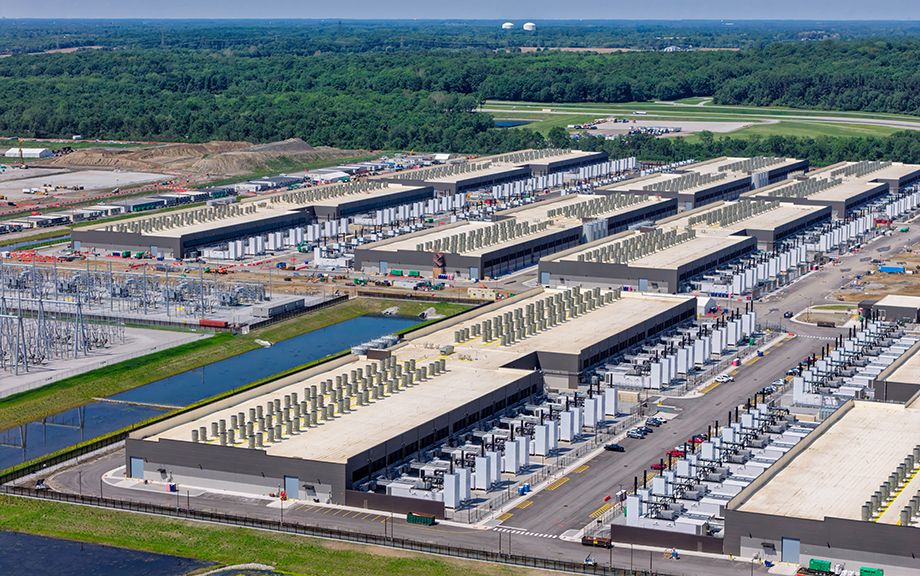
The AI boom is showing up in different corners of the U.S. economy, including international trade. Imports of semiconductors, servers, and computing equipment have climbed sharply yet the U.S. current account deficit has been largely unchanged. To better understand how the AI boom has not substantially affected the trade balance, consider that the current account is dictated by the gap between domestic saving and investment spending. It turns out that aggregate saving and investment spending have not changed much during the AI boom. Aggregate investment has not risen due to weakness outside the AI sector and business saving has remained robust.
Posted at 7:00 am in Artificial Intelligence (AI), International Economics, Macroeconomics | Permalink | Comments (0)
October 8, 2026
AI Adoption and Employment Expectations: Evidence from a Survey of Small Business Owners

There is little consensus on the effect of AI adoption on employment. Economy-wide measures of pay and headcount have moved little even as AI adoption has spread rapidly, yet narrower measures document declining hiring for workers at the start of their careers or in AI-exposed occupations. In this post, we revisit this topic for U.S. small businesses. We use data from the 2025 Small Business Credit Survey (SBCS) to examine the twelve-month-forward employment and revenue expectations of AI users. We find that firms currently using AI are significantly more likely than non-users to expect increased employment and revenues over the next year, even after accounting for firm and owner characteristics and location. Revenue expectations are most optimistic for AI users that report facing operational challenges in utilizing technology.
Posted at 7:00 am in Artificial Intelligence (AI), Employment, Labor Market | Permalink | Comments (0)
September 1, 2026
Businesses Are Using AI to Transform Work, Not Cut Jobs

The ongoing advancement and adoption of artificial intelligence continues to raise concerns about widespread job losses. Over the past three years, our regional business surveys have asked firms about their AI adoption and its effects on their workforces. This year, we found that AI use among regional businesses has continued to rise sharply, with more than 60 percent of service firms and about half of manufacturers now using AI—a notable increase from 40 percent and 26 percent, respectively, reported in 2025. Despite this rapid adoption, regional firms’ investments in AI are generally modest, usage tends to be concentrated among a small share of workers within firms, and layoffs have remained uncommon. And, while some firms have scaled back hiring due to AI, others have added workers to help them use it. Retraining employees in response to AI remains the primary way firms are adjusting their workforces.
Posted at 7:00 am in Artificial Intelligence (AI) | Permalink
August 5, 2026
AI’s Impact on Labor and Hiring

Welcome to Street Level, my new series on Liberty Street Economics. As research director, I try to keep track of the wide range of work that the economists at the New York Fed produce. My goal for this series is to periodically offer some thematic discussion of that work, highlighting recent analysis by Research staff and adding my own observations on the issue at hand. In this inaugural post, I’ll focus on perhaps the hottest topic going: How artificial intelligence is changing the labor market and hiring behaviors.
July 7, 2026
What Do Over 3,000 Bank Runs Teach Us About Banking Crises?
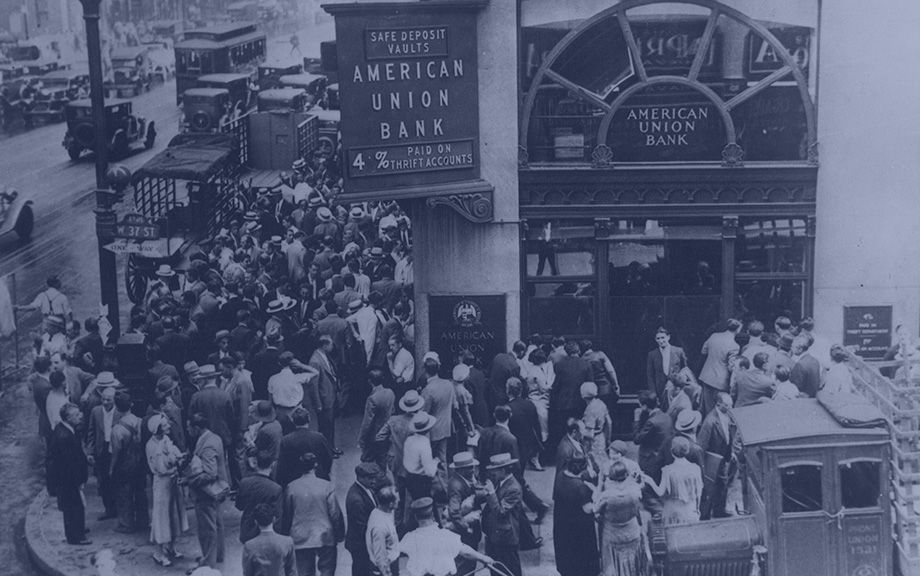
Runs on financial institutions are one of the salient markers of financial crises. But the role of runs in crises is a topic of longstanding debate. Runs can be seen as the key turning point, whereby even small shocks can generate severe crises with widespread bank failures. Another view is that runs are mainly a symptom of deeper rot in the financial system, exacerbating crises rather than being their primary cause. Understanding this debate has first order implications for how to think about financial crises and the appropriate policy responses. In this post, we use a new database of more than 3,000 bank runs (introduced in our companion post) to show that poor fundamentals are central to explaining both when runs occur and when they have severe economic effects. We argue that this evidence tempers the view that small shocks can have outsized real effects through self-fulfilling run dynamics.
Posted at 10:01 am in Artificial Intelligence (AI), Banks, Crisis, Liquidity | Permalink | Comments (1)
Using AI to Let History Speak About Bank Runs
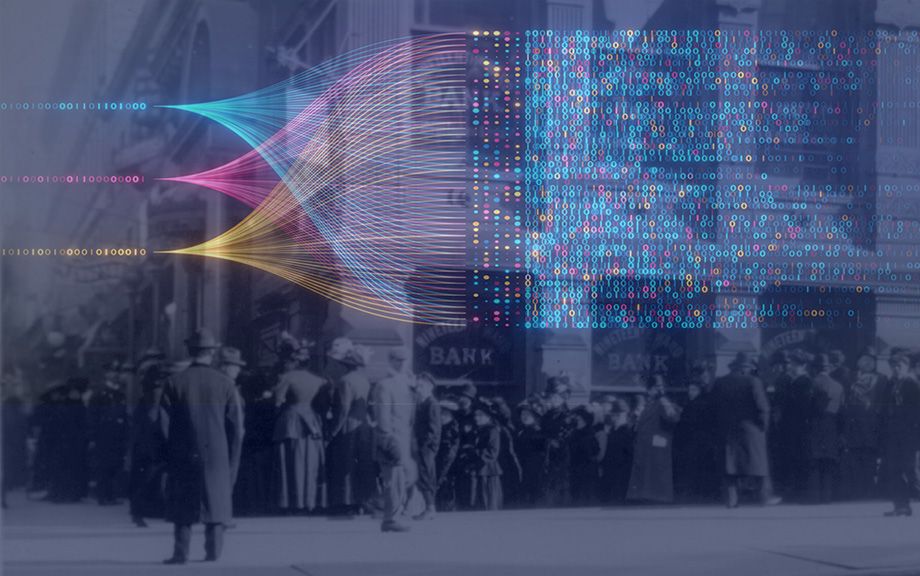
Banking crises are commonly associated with bank runs and banking panics, yet our empirical understanding of bank runs is constrained by a lack of bank-level data. In a new paper, we use large language models (LLMs) to extract information on bank runs from millions of digitized historical newspaper pages, creating the most comprehensive database of bank runs in U.S. history. Every bank run episode that we identify is documented on a companion website where users can browse and examine individual episodes, and read the original newspaper articles. In this post, we describe how we built this dataset and discuss what its basic features reveal.
June 1, 2026
Remote Work Leaves Younger Workers Sidelined

Youth unemployment has risen dramatically since the pandemic—as has the prevalence of remote work. Our analysis suggests that these trends are related, with remote work making it more difficult for managers to train and mentor new employees. Accordingly, companies may be reluctant to hire less-experienced workers in distributed work arrangements. We estimate that remote work can explain 64 percent of the recent increase in unemployment among young college graduates. Further, the timing of this surge suggests that remote work—not generative AI—explains the bulk of the rise in youth unemployment.
May 20, 2026
AI’s Macroeconomic Challenges and Promises

In the third quarter of 2025, America’s largest tech firms for the first time spent more on capital investment than they earned from operations. The implication is that AI, a technology with the potential to make the economy more productive, is, for now, absorbing resources faster than it is generating returns. This post discusses how the tension between AI’s long-run promise and its short-run costs affects the outlooks for inflation, real activity, and financial stability.
Posted at 7:00 am in Artificial Intelligence (AI), Inflation, Macroeconomics, Monetary Policy | Permalink
May 14, 2026
Do Job Postings Show Early Labor‑Market Effects of AI?

As generative AI tools become more widely used, a key issue is the technology’s impact on labor demand. Where might we find evidence of that impact? In this post, we examine whether early evidence of AI’s effect on the labor market appears in firms’ job postings. We combine an occupational measure of AI exposure with detailed U.S. job-posting data from Lightcast, which aggregates listings from company career pages, national and local job boards, and job-listing aggregators. Using this data, we test whether postings for AI-exposed occupations declined disproportionately since the release of ChatGPT in late 2022. We find that, while overall hiring has slowed since then, the evidence from job postings provides little indication of a distinct AI-driven decline in labor demand.
May 11, 2026
Will Mounting Supply Chain Strains Hamstring the AI Investment Boom?

The conflict in the Middle East has precipitated a global supply shock—the third in six years following the pandemic in 2020 and Russia’s invasion of Ukraine in 2022. The current shock raises the specter of spillovers to the U.S. through both prices and physical shortages of goods. A critical conduit for spillovers through these channels is via Asian supply chains, especially from middle- to lower-middle income countries in southeast Asia, which are key suppliers for goods needed for the AI infrastructure build-out in the U.S. These countries are also heavily reliant on Middle East energy imports. This post examines key factors related to these Asian supply chain vulnerabilities.
Posted at 7:00 am in Artificial Intelligence (AI), International Economics, Supply Chain | Permalink
 RSS Feed
 Follow Liberty Street Economics
