










148 posts on "Regional Analysis"
July 9, 2026
Effect of Tariffs on U.S. Small Businesses
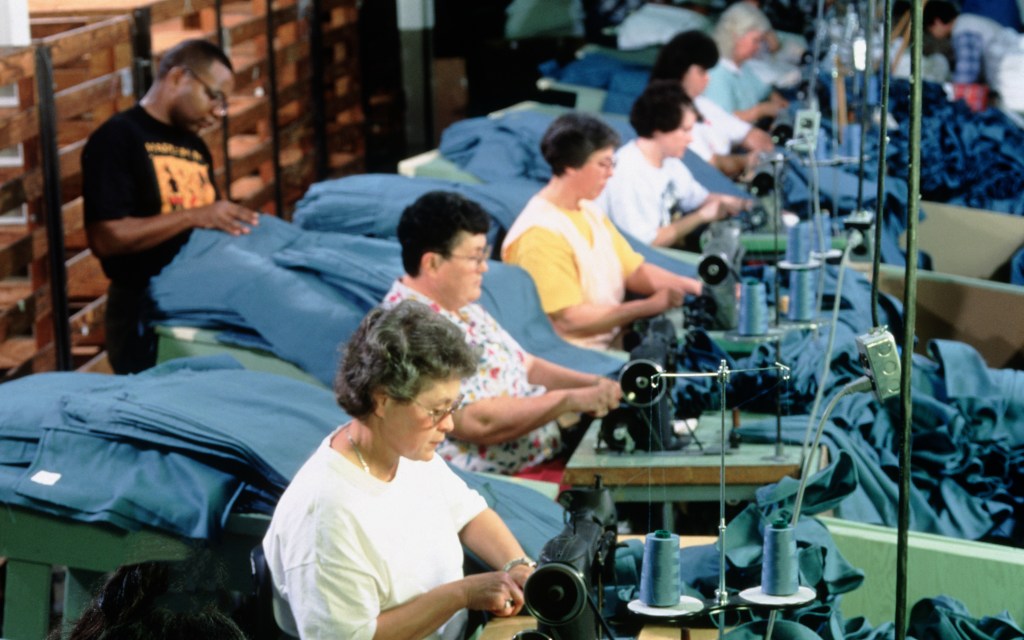
How has the recent implementation of tariffs affected small businesses? Due to lack of data, little is known about this issue. In this Liberty Street Economics post, we use data from the 2025 edition of the Small Business Credit Survey (SBCS) to explore this question for businesses nationally and in the Second District (defined, for the purpose of this study, as New York, New Jersey, and Connecticut). We find that the majority of national firms in the goods and retail sectors reported experiencing financial challenges due to tariffs in 2025, with even larger shares of regional firms doing so. In response, about 80 percent of national and regional firms passed on at least some of the higher costs of imported inputs to customers, while about 60 percent absorbed some of the costs, as many firms did some of both. Firms that faced greater tariff challenges in 2025 were more pessimistic about employment and revenues in 2026.
June 2, 2026
Struggling Regional Small Businesses Deeply Pessimistic About 2026 Prospects

We recently updated the suite of indicators describing the performance of small businesses in the Second District (defined, for the purpose of this study, as New York, New Jersey, and Connecticut) and nationally with data from the 2025 edition of the Small Business Credit Survey (SBCS). In this post, we find that regional small businesses reported severe declines in employment and revenue growth in 2025 and became more pessimistic about growth in 2026. In contrast, small firms in the rest of the nation enjoyed stable revenues and employment in 2025 and, while they also had lower expectations of future growth, the decline was smaller in magnitude. Given the importance of small businesses in employment generation, analyzing such data helps to inform the design of effective monetary policy and to understand trends in the regional economy.
March 4, 2026
Firms’ Inflation Expectations Return to 2024 Levels

Businesses experienced substantial cost pressures in 2025 as the cost of insurance and utilities rose sharply, while an increase in tariffs contributed to rising goods and materials costs. This post examines how firms in the New York-Northern New Jersey region adjusted their prices in response to these cost pressures and describes their expectations for future price increases and inflation. Survey results show an acceleration in firms’ price increases in 2025, with an especially sharp increase in the manufacturing sector. While both cost and price increases intensified last year, our surveys reveal that these do not contribute to firms believing that inflation will be on the rise in the short or longer term. In fact, firms’ inflation expectations have moderated compared to what was expected a year ago. Firms now anticipate inflation of 3 percent in the year ahead, lower than what was expected last year at this time. Importantly, like last year, longer-term inflation expectations also remain well anchored.
Are Rising Employee Health Insurance Costs Dampening Wage Growth?

Employer-sponsored health insurance represents a substantial component of total compensation paid by firms to many workers in the United States. Such costs have climbed by close to 20 percent over the past five years. Indeed, the average annual premium for employer-sponsored family health insurance coverage was about $27,000 in 2025—roughly equivalent to the wage of a full-time worker paid $15 per hour. Our February regional business surveys asked firms whether their wage setting decisions were influenced by the rising cost of employee health insurance. As we showed in our companion post, respondents reported an average increase in such costs of more than 13 percent this year. Businesses providing insurance to their workers indicated that absent these cost increases, they would have raised wages by roughly an additional percentage point, on average, suggesting that rising health insurance costs resulted in a drag on wage growth for workers at these firms.
Posted at 10:01 am in Labor Market, Microeconomics, New Jersey, New York, Regional Analysis | Permalink
What’s Driving Rising Business Costs?

After a period of moderating cost increases, businesses faced mounting cost pressures in 2025. While tariffs played a role in driving up the costs of many inputs—especially among manufacturers—they represent only part of the story. Indeed, firms grappled with substantial cost increases across many categories in the past year. This post is the first in a three-part series analyzing cost and price dynamics among businesses in the New York-Northern New Jersey region based on data collected through our regional business surveys. Firms reported that the sharpest cost increases over the past year were for employee health insurance and utilities, followed by business insurance, and goods and materials inputs. Firms expect cost growth to moderate in 2026. Our second post will examine the sharp increase in employee health insurance costs in more detail and show that such rising costs dampened wage growth for some workers. The third post will analyze firms’ pricing behavior in light of these cost pressures, as well as firms’ inflation expectations.
February 3, 2026
New York Fed EHIs Reveal Small Business Struggles

The New York Fed’s Economic Heterogeneity Indicators (EHIs) aim to study macroeconomic outcomes experienced by various groups of people and businesses. We recently added a suite of indicators describing the performance of small businesses to the EHIs—both for the region (defined, for the purpose of this study, as New York, New Jersey, and Connecticut) and nationally. Small businesses are critical to employment generation as they accounted for almost 63 percent of new private sector jobs since 2005 and employed almost 46 percent of all U.S. workers in 2025. Thus, understanding economic trends and impacts for small businesses is important for designing effective monetary policy and aligns with the New York Fed’s mission to support the regional economy. In this post, we highlight some aspects of small business profitability, revenues, employment, and indebtedness since 2019 for firms of different sizes.
September 4, 2025
Are Businesses Scaling Back Hiring Due to AI?

The swift advancement of artificial intelligence (AI) has sparked significant concern that this new technology will replace jobs and stifle hiring. To explore the effects of AI on employment, our August regional business surveys asked firms about their adoption of AI and if they had made any corresponding adjustments to their workforces. Businesses reported a notable increase in AI use over the past year, yet very few firms reported AI-induced layoffs. Indeed, for those already employed, our results indicate AI is more likely to result in retraining than job loss, similar to our findings from last year. That said, AI is influencing recruiting, with some firms scaling back hiring due to AI and some firms adding workers proficient in its use. Looking ahead, however, layoffs and reductions in hiring plans due to AI use are expected to increase, especially for workers with a college degree.
Posted at 10:00 am in Artificial Intelligence (AI), Labor Market, New Jersey, New York, Regional Analysis | Permalink
June 4, 2025
Are Businesses Absorbing the Tariffs or Passing Them On to Their Customers?

U.S. import tariffs increased to historically high rates in recent months, raising the costs of many imported inputs businesses use. Businesses subject to these higher costs have been faced with difficult and complex decisions about whether to absorb the tariffs through lower profits, raise their prices to recover the higher costs, or some combination of both. These decisions are influenced by the degree of competition in the marketplace, potential customer reactions, and the ability to maintain profit margins, among other factors. Our May survey of businesses in the New York–Northern New Jersey region asked firms about the tariffs they faced, recent changes in the cost of imported goods, and whether they were passing on tariff-induced cost increases to their customers. Results indicate most businesses passed on at least some of the higher tariffs to their customers, with nearly a third of manufacturers and about 45 percent of service firms fully passing along all tariff-induced cost increases by raising their prices.
March 5, 2025
Firms’ Inflation Expectations Have Picked Up
Editors note: Since this post was published, we clarified language in the first paragraph about year-ahead expectations for manufacturing and service firms in the 2025 survey. We also corrected the y-axis range of Chart 2. (March 5, 11 a.m.)

After a period of particularly high inflation following the pandemic recession, inflationary pressures have been moderating the past few years. Indeed, the inflation rate as measured by the consumer price index has come down from a peak of 9.1 percent in the summer of 2022 to 3 percent at the beginning of 2025. The New York Fed asked regional businesses about their own cost and price increases in February, as well as their expectations for future inflation. Service firms reported that business cost and selling price increases continued to moderate through 2024, while manufacturing firms reported some pickup in cost increases but not price increases. Looking ahead, firms expect both cost and price increases to move higher in 2025. Moreover, year-ahead inflation expectations have risen from 3 percent last year at this time to 3.5 among manufacturing firms and 4 percent among service firms, though longer-term inflation expectations remain anchored at around 3 percent.
September 4, 2024
AI and the Labor Market: Will Firms Hire, Fire, or Retrain?

The rapid rise in Artificial Intelligence (AI) has the potential to dramatically change the labor market, and indeed possibly even the nature of work itself. However, how firms are adjusting their workforces to accommodate this emerging technology is not yet clear. Our August regional business surveys asked manufacturing and service firms special topical questions about their use of AI, and how it is changing their workforces. Most firms that report expected AI use in the next six months plan to retrain their workforces, with far fewer reporting adjustments to planned headcounts.
 RSS Feed
 Follow Liberty Street Economics
