










26 posts on "Asani Sarkar"
February 11, 2021
Did Subsidies to Too‑Big‑To‑Fail Banks Increase during the COVID‑19 Pandemic?

New Liberty Street Economics analysis by Asani Sarkar investigates whether the COVID-19 pandemic has led to an increase in implicit TBTF subsidies for large firms.
Posted at 7:00 am in Banks, Financial Institutions, Pandemic, Systemic Risk | Permalink | Comments (2)
September 30, 2020
Did Too‑Big‑To‑Fail Reforms Work Globally?

Once a bank grows beyond a certain size or becomes too complex and interconnected, investors often perceive that it is “too big to fail” (TBTF), meaning that if the bank were to fail, the government would likely bail it out. Following the global financial crisis (GFC) of 2008, the G20 countries agreed on a set of reforms to eliminate the perception of TBTF, as part of a broader package to enhance financial stability. In June 2020, the Financial Stability Board (FSB; a 68-member international advisory body set up in 2009) published the results of a year-long evaluation of the effectiveness of TBTF reforms. In this post, I discuss the main conclusions of the report—in particular, the finding that implicit funding subsidies to global banks have decreased since the implementation of reforms but remain at levels comparable to the pre-crisis period.
August 7, 2020
Securing Secured Finance: The Term Asset‑Backed Securities Loan Facility
The asset-backed securities (ABS) market, by supporting loans to households and businesses such as credit card and student loans, is essential to the flow of credit in the economy. The COVID-19 pandemic disrupted this market, resulting in higher interest rate spreads on ABS and halting the issuance of most ABS asset classes. On March 23, 2020, the Fed established the Term Asset-Backed Securities Loan Facility (TALF) to facilitate the issuance of ABS backed by a variety of loan types including student loans, credit card loans, and loans guaranteed by the Small Business Administration (SBA), thereby re-enabling the flow of credit to households and businesses of all sizes. In this post, we describe how the TALF works, its impact on market conditions, and how it differs from the TALF that the Fed established in 2009.
July 17, 2020
MBS Market Dysfunctions in the Time of COVID‑19
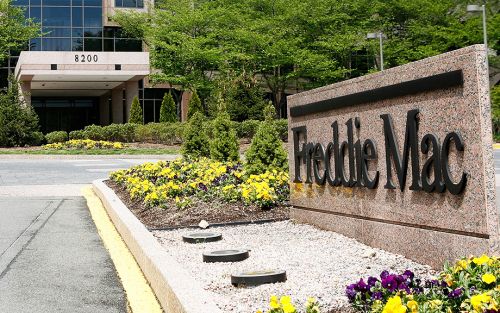
Haoyang Liu, Asani Sarkar, and coauthors study a particular aspect of MBS market disruptions by showing how a long-standing relationship between cash and forward markets broke down, in spite of dealers increasing the provision of liquidity. The analysis also highlights an innovative response by the Federal Reserve that seemed to have helped to normalize market functioning.
Posted at 7:00 am in Financial Institutions, Financial Markets, Liquidity, Pandemic | Permalink | Comments (2)
April 15, 2020
The COVID‑19 Pandemic and the Fed’s Response

In this post, the authors review the Fed’s action following the coronavirus outbreak, and compare it with the response to the 2007-09 financial crisis.
January 17, 2019
The Indirect Costs of Lehman’s Bankruptcy
In our previous post, we assessed losses to customers and clients from foregone opportunities after Lehman Brothers filed for bankruptcy in September 2008. In this post, we examine losses to Lehman and its investors in anticipation of bankruptcy. For example, if bankruptcy is expected, Lehman’s earnings may decline as customers close their accounts or certain securities (such as derivatives) to which Lehman is a counterparty may lose value. We estimate these losses by analyzing Lehman’s earnings and stock, bond, and credit default swap (CDS) prices.
 RSS Feed
 Follow Liberty Street Economics
