










258 posts on "Macroeconomics"
May 3, 2021
Endogenous Supply Chains, Productivity, and COVID‑19
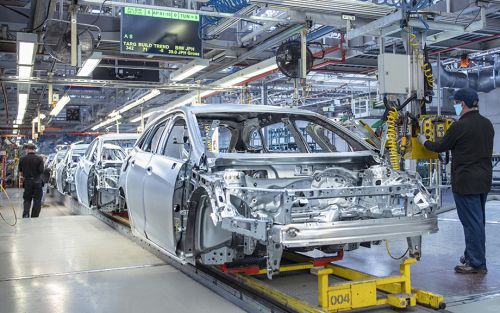
During the COVID-19 pandemic, many industries adapted to new social distancing guidelines by adopting new technologies, providing protective equipment for their employees, and digitizing their methods of production. These changes in industries’ supply chains, together with monetary and fiscal stimulus, contributed to dampening the economic impact of COVID-19 over time. In this post, I discuss a new framework that analyzes how changes in supply chains can drive economic growth in the long run and mitigate recessions in the short run.
April 5, 2021
“Excess Savings” Are Not Excessive
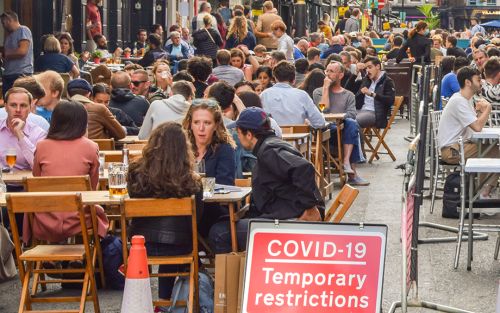
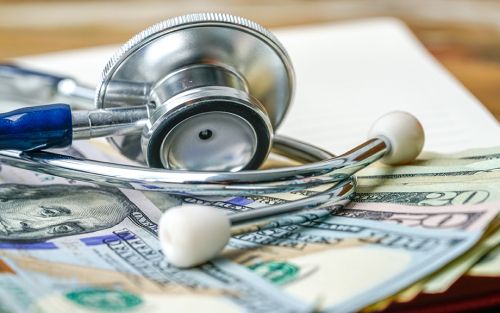
How will the U.S. economy emerge from the ongoing COVID-19 pandemic? Will it struggle to return to prior levels of employment and activity, or will it come roaring back as soon as vaccinations are widespread and Americans feel comfortable travelling and eating out? Part of the answer to these questions hinges on what will happen to the large amount of “excess savings” that U.S. households have accumulated since last March. According to most estimates, these savings are around $1.6 trillion and counting. Some economists have expressed the concern that, if a considerable fraction of these accumulated funds is spent as soon as the economy re-opens, the ensuing rush of demand might be destabilizing. This post argues that these savings are not that excessive, when considered against the backdrop of the unprecedented government interventions adopted over the past year in support of households and that they are unlikely to generate a surge in demand post-pandemic.
Posted at 7:00 am in Banks, Crisis, Household Finance, Labor Market, Macroeconomics, Pandemic, Unemployment | Permalink | Comments (1)
January 15, 2021
Discretionary and Nondiscretionary Services Expenditures during the COVID‑19 Recession
The coronavirus pandemic and the various measures to address it have led to unprecedented convulsions to the U.S. and global economies. In this post, I examine those extraordinary impacts through the lens of personal consumption expenditures on discretionary and nondiscretionary services, a framework I developed in a 2011 post (and subsequently employed in 2012, 2014, and 2017). In particular, I show that there were exceptional declines in both services categories during the spring; their recoveries, however, have displayed notably different patterns in recent months, with nondiscretionary services expenditures nearly back to their prior level and discretionary services expenditures seemingly stalled well below their pre-pandemic peak.
December 23, 2020
The New York Fed DSGE Model Forecast—December 2020
This post presents an update of the economic forecasts generated by the Federal Reserve Bank of New York’s dynamic stochastic general equilibrium (DSGE) model. We describe very briefly our forecast and its change since September 2020.
As usual, we wish to remind our readers that the DSGE model forecast is not an official New York Fed forecast, but only an input to the Research staff’s overall forecasting process. For more information about the model and variables discussed here, see our DSGE model Q & A. Note that interactive charts are now available for DSGE model forecasts.
October 23, 2020
How Has China’s Economy Performed under the COVID‑19 Shock?
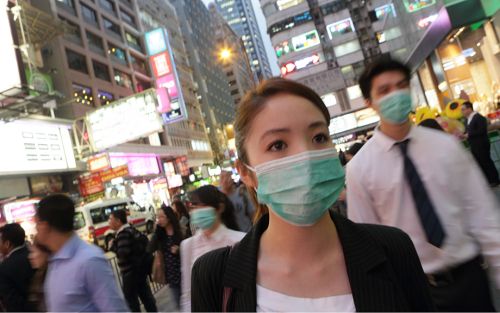
China’s official GDP growth figures so far for 2020 have been broadly in line with alternative indicators; that growth presently is staging a strong rebound and providing a boost to the global economy, but faces headwinds.
September 29, 2020
The New York Fed DSGE Model Forecast—September 2020
This post presents an update of the economic forecasts generated by the Federal Reserve Bank of New York’s dynamic stochastic general equilibrium (DSGE) model. We describe very briefly our forecast and its change since June 2020.
September 21, 2020
How Did State Reopenings Affect Small Businesses?
In our previous post, we looked at the effects that the reopening of state economies across the United States has had on consumer spending. We found a significant effect of reopening, especially regarding spending in restaurants and bars as well as in the healthcare sector. In this companion post, we focus specifically on small businesses, using two different sources of high-frequency data, and we employ a methodology similar to that of our previous post to study the effects of reopening on small business activity along various dimensions. Our results indicate that, much like for consumer spending, reopenings had positive and significant effects in the short term on small business revenues, the number of active merchants, and the number of employees working in small businesses. It is important to stress that we are not expressing any views in this post on the normative question of whether, when, or how states should loosen or tighten restrictions aimed at controlling the COVID-19 pandemic.
Posted at 7:00 am in Crisis, Employment, Household Finance, Labor Market, Macroeconomics, Pandemic, Unemployment | Permalink
September 18, 2020
Did State Reopenings Increase Consumer Spending?
The spread of COVID-19 in the United States has had a profound impact on economic activity. Beginning in March, most states imposed severe restrictions on households and businesses to slow the spread of the virus. This was followed by a gradual loosening of restrictions (“reopening”) starting in April. As the virus has re-emerged over the last few weeks, a number of states have taken steps to reverse the reopening of their economies. For example, Texas and Florida closed bars again in June, and Arizona additionally paused operations of gyms and movie theatres. Taken together, these measures raise the question of how closures and reopenings affect consumer spending. In this post, we investigate how much consumer spending increased after the reopenings. It is important to stress that we are not expressing any views on the normative question of whether, when, or how states should loosen or tighten restrictions aimed at controlling the COVID-19 pandemic.
What’s Up with the Phillips Curve?
U.S. inflation used to rise during economic booms, as businesses charged higher prices to cope with increases in wages and other costs. When the economy cooled and joblessness rose, inflation declined. This pattern changed around 1990. Since then, U.S. inflation has been remarkably stable, even though economic activity and unemployment have continued to fluctuate. For example, during the Great Recession unemployment reached 10 percent, but inflation barely dipped below 1 percent. More recently, even with unemployment as low as 3.5 percent, inflation remained stuck under 2 percent. What explains the emergence of this disconnect between inflation and unemployment? This is the question we address in “What’s Up with the Phillips Curve?,” published recently in Brookings Papers on Economic Activity.
Posted at 7:00 am in DSGE, Inflation, Macroeconomics, Monetary Policy, Unemployment | Permalink | Comments (3)
August 4, 2020
Tracking the COVID‑19 Economy with the Weekly Economic Index (WEI)
At the end of March, we launched the Weekly Economic Index (WEI) as a tool to monitor changes in real activity during the pandemic. The rapid deterioration in economic conditions made it important to assess developments as soon as possible, rather than waiting for monthly and quarterly data to be released. In this post, we describe how the WEI has measured the effects of COVID-19. So far in 2020, the WEI has synthesized daily and weekly data to measure GDP growth remarkably well. We document this performance, and we offer some guidance on evaluating the WEI’s forecasting abilities based on 2020 data and interpreting WEI updates and revisions.
Posted at 2:58 pm in Corporate Finance, Forecasting, Macroeconomics, Pandemic, Recession | Permalink
 RSS Feed
 Follow Liberty Street Economics
