









7 posts from "November 2026"
November 16, 2026
Can Workers Predict Job Finding and Job Loss?

Workers’ perceptions of the labor market may differ from aggregate labor market statistics. Individuals might be overly optimistic about their chance of finding a job, or too pessimistic about the odds of losing their current position. In this post, we compare subjective beliefs of future job-finding and job-loss from the New York Fed’s Survey of Consumer Expectations (SCE) with their realized counterparts in the Current Population Survey (CPS). We then investigate how closely aggregate perceptions of job-finding and job-loss prospects align with realized rates.
November 12, 2026
Banking System Vulnerability: 2026 Update

As in previous years, we provide in this post an update on the vulnerability of the U.S. banking system based on four analytical models that capture different aspects of this vulnerability. We use data through 2026:Q2 to update our analysis and discuss how the vulnerability measures have changed since our last update one year ago.
November 10, 2026
A Look at the Wider Divide in Credit Card Delinquency by Income

Credit card delinquency rose sharply between 2022 and 2024, and the increase was steepest among borrowers in lower-income neighborhoods. Here, we check in on credit card performance by neighborhood income and trace when the borrowers who are now struggling with their payments were issued cards. We find that during the pandemic, an increasing share of new credit cards went to borrowers with lower incomes and credit scores, and those accounts are now showing higher levels of distress.
November 9, 2026
Has U.S. Monetary Policy Really Improved? A 150‑Year Perspective
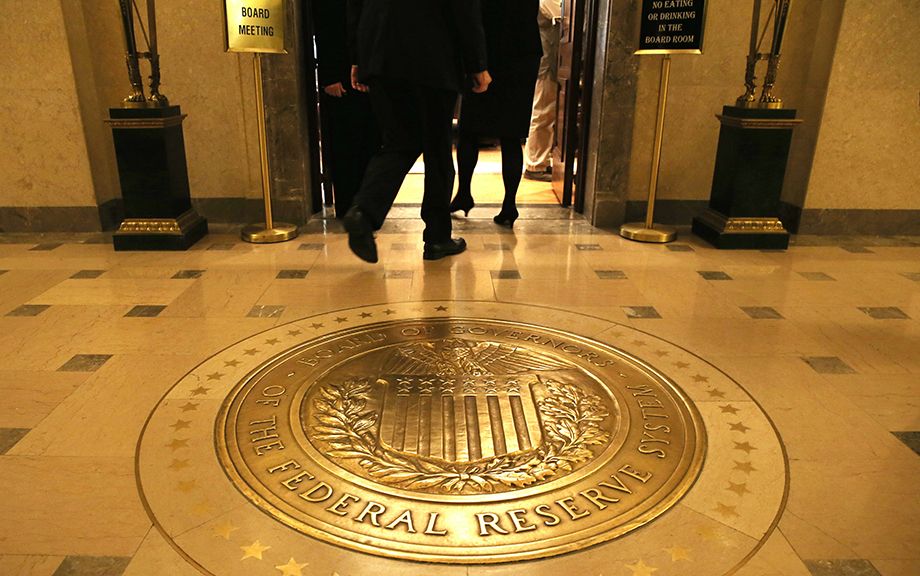
Has U.S. monetary policy actually improved over time? Or was the apparent success of the modern Federal Reserve mostly the result of more favorable economic conditions and better luck? In this post, we summarize our paper,* which develops a framework for comparing monetary policy across different economic environments. Our approach asks how close policy came to the best response given the economic conditions and shocks policymakers faced. Applying this framework to 150 years of U.S. monetary history, we find that meaningful improvements in monetary policy occurred only in the last thirty years. Most of the gains reflect, among other developments, substantially better responses to financial shocks and supply shocks.
November 5, 2026
The U.S. Oil Sector’s Role in Restraining Prices

The start of the Middle East conflict in early 2026 caused an unprecedented drop in global petroleum supply. In response, oil prices jumped—but not to unprecedentedly high levels. The U.S. oil sector was a key factor in moderating the shock. For one, its steady increases in drilling helped create a large oversupply in the global market before the conflict, making it less of a challenge to offset the drop in Middle East oil output. In addition, U.S. commercial and government inventories were rapidly drawn down, filling half the gap between global supply and demand in the second quarter by some estimates. Inventories, though, are a limited resource and U.S. stockpiles stopped falling in July. As a consequence, the continued shortfall in global production has been managed by running down inventories in the rest of the world.
November 4, 2026
How Market Position Shapes Credit Card Interest Rates

Why is it that two borrowers who look much alike can be offered very different rates when applying for a credit card? In a recent paper, we address this question by examining how the rate offered changes when the lender’s funding cost falls. Data on 14 million newly issued cards show that when a lender’s funding costs decline, the lender passes less of that decline on to the offer rate when it holds a large market share. That is, two borrowers with similar credit scores and incomes borrowing from the same lender can see noticeably different interest rates on the credit card they are applying for.
Posted at 7:00 am in Credit, Financial Markets, Household Finance, Macroeconomics | Permalink | Comments (0)
November 2, 2026
How Do Banking Supervisors Deal with Failing Banks?

In this post, we discuss insights from a recent staff report on the role of banking supervision in identifying and disciplining failing banks. We show that bank failures typically result from supervisory closure decisions based on hard information about book equity. Yet hard information is itself partly produced by supervision, as our evidence suggests that supervisors require troubled banks to recognize potential losses. We argue that supervision faces a trade-off: Stricter supervision can reduce the costs of resolving failing banks, but it can also lead to tighter regulatory capital constraints and hold back credit supply.
 RSS Feed
 Follow Liberty Street Economics