










393 posts on "Liberty Street Economics"
November 15, 2022
Balances Are on the Rise—So Who Is Taking on More Credit Card Debt?

Total household debt balances continued their upward climb in the third quarter of 2022 with an increase of $351 billion, the largest nominal quarterly increase since 2007. This rise was driven by a $282 billion increase in mortgage balances, according to the latest Quarterly Report on Household Debt & Credit from the New York Fed’s Center for Microeconomic Data. Mortgages, historically the largest form of household debt, now comprise 71 percent of outstanding household debt balances, up from 69 percent in the fourth quarter of 2019. An increase in credit card balances was also a boost to the total debt balances, with credit card balances up $38 billion from the previous quarter. On a year-over-year basis, this marked a 15 percent increase, the largest in more than twenty years. Here, we take a closer look at the variation in credit card trends for different demographics of borrowers using our Consumer Credit Panel (CCP), which is based on credit reports from Equifax.
How Liquid Has the Treasury Market Been in 2022?

Policymakers and market participants are closely watching liquidity conditions in the U.S. Treasury securities market. Such conditions matter because liquidity is crucial to the many important uses of Treasury securities in financial markets. But just how liquid has the market been and how unusual is the liquidity given the higher-than-usual volatility? In this post, we assess the recent evolution of Treasury market liquidity and its relationship with price volatility and find that while the market has been less liquid in 2022, it has not been unusually illiquid after accounting for the high level of volatility.
November 14, 2022
Banking System Vulnerability: 2022 Update

To assess the vulnerability of the U.S. financial system, it is important to monitor leverage and funding risks—both individually and in tandem. In this post, we provide an update of four analytical models aimed at capturing different aspects of banking system vulnerability with data through 2022:Q2, assessing how these vulnerabilities have changed since last year. The four models were introduced in a Liberty Street Economics post in 2018 and have been updated annually since then.
Posted at 7:00 am in Bank Capital, Banks, Financial Institutions, Liquidity, Systemic Risk | Permalink
November 10, 2022
A Look at the New York‑Northern New Jersey Region’s Pandemic Housing Boom

Since the start of the pandemic, home prices in the U.S. have increased by an astonishing 40 percent. The New York-Northern New Jersey region saw a similar meteoric rise, as home prices shot up by 30 percent or more almost everywhere—even in upstate New York, where economic growth was sluggish well before the pandemic hit. New York City is the exception, where home price growth was less than half that pace. Indeed, home prices actually declined in Manhattan early in the pandemic, though they have rebounded markedly since. Much of the region’s home price boom can be traced to the rise in remote work, which increased the already strong demand for housing at a time when housing inventories were low and declining. Home price increases have largely outpaced income gains through the pandemic boom, resulting in a reduction in housing affordability in the region. However, with mortgage rates rising, it appears that the region’s housing boom is waning, as it is for the nation as a whole, with prices leveling off, though the inventory of available homes remains historically low.
Do Exchange Rates Fully Reflect Currency Pressures?
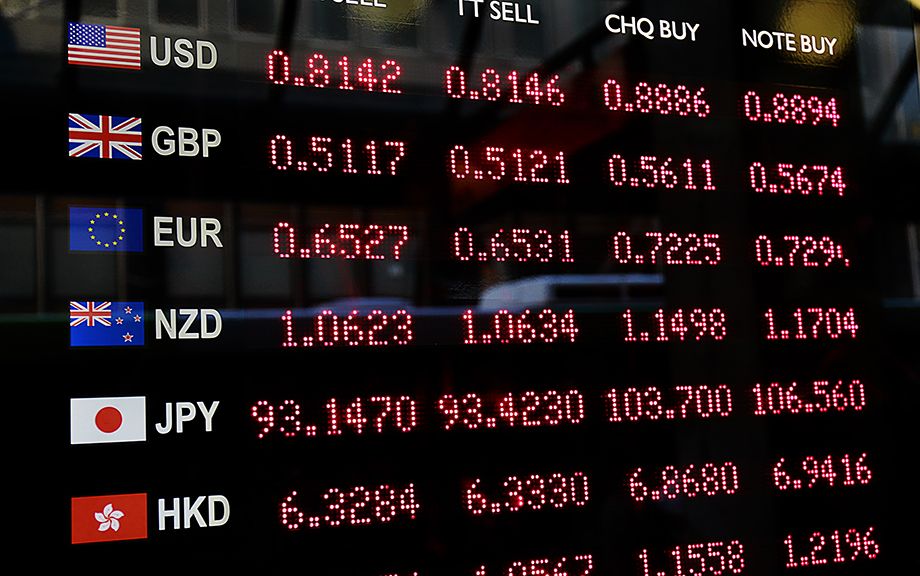
Currency values are important both for the real economy and the financial sector. When faced with currency market pressures, some central banks and finance ministries turn to foreign exchange intervention (FXI) in an effort to reduce realized currency depreciation, thus diminishing its economic and financial consequences. This post provides insights into how effective these interventions might be in limiting currency depreciation.
November 9, 2022
A Closer Look at Chinese Overseas Lending
While considerable attention has focused on China’s credit boom and the rise of China’s domestic debt levels, another important development in international finance has been growth in China’s lending abroad. In this post, we summarize what is known about the size and scope of China’s external lending, discuss the incentives that drove this lending, and consider some of the challenges these exposures pose for Chinese lenders and foreign borrowers.
November 7, 2022
What Is Atomic Settlement?

Distributed ledger technologies (DLTs) have garnered growing interest in recent years and are making inroads into traditional finance. One purported benefit of DLTs is their ability to bring about “atomic” settlement. Indeed, several recent private sector projects (SDX, Fnality, HQLAx) aim to do just that. But what exactly is atomic settlement? In this post, we explain that atomic settlement, as it is often defined, combines two distinct properties: instant settlement and simultaneous settlement, which should be kept separate.
October 21, 2022
Federal Reserve System Conference on the Financial Stability Considerations for Monetary Policy

How does monetary policy affect financial vulnerabilities and, in turn, how does the state of the financial system interact with the maximum employment and price stability goals of monetary policy? These were the key questions covered in the September 30 conference organized by the Federal Reserve System. The conference was co-led by Federal Reserve Board Vice Chair Lael Brainard and Federal Reserve Bank of New York President and CEO John C. Williams, each of whom offered prepared remarks. The program also included a panel of current and former central bank policymakers to explore the themes of the conference, as well as paper presentations with discussants. In this post, we discuss highlights of the conference. The agenda includes links to all of the presentations as well as videos for each session.
Posted at 7:00 am in Household Finance, Inflation, Monetary Policy, Systemic Risk | Permalink | Comments (1)
October 20, 2022
Long COVID Appears to Have Led to a Surge of the Disabled in the Workplace

Although most of those infected with COVID-19 have recovered relatively quickly, a substantial share has not, and remains symptomatic months or even years later, in what is commonly referred to as long COVID. Data on the incidence of long COVID is scarce, but recent Census Bureau data suggest that sixteen million working age Americans suffer from it. The economic costs of long COVID is estimated to be in the trillions. While many with long COVID have dropped out of the labor force because they can no longer work, many others appear to be working despite having disabilities related to the disease. Indeed, there has been an increase of around 1.7 million disabled persons in the U.S. since the pandemic began, and there are close to one million newly disabled workers. These disabled workers can benefit from workplace accommodations to help them remain productive and stay on the job, particularly as the majority deal with fatigue and brain fog, the hallmarks of long COVID.
Posted at 7:02 am in Equitable Growth, Inequality, Labor Market, Pandemic | Permalink | Comments (2)
How Have Racial and Ethnic Earnings Gaps Changed after COVID‑19?
Racial and ethnic earnings disparities have been salient features of the U.S. economy for decades. Between the pandemic-driven recession in 2020 and the rising inflation since 2021, workers’ real and nominal earnings have seen rapid change. To get a sense of how recent economic conditions have affected earnings disparities, we examine real and nominal weekly earnings trends for Asian, Black, Hispanic, and white workers. We find that average real weekly earnings have been declining in the past year, but less so for Black and Hispanic workers than for white and Asian workers. Black and Hispanic workers have also experienced small increases in real earnings since the pre-pandemic period.
 RSS Feed
 Follow Liberty Street Economics
