










258 posts on "Macroeconomics"
May 19, 2016
Just Released: Presenting U.S. Economy in a Snapshot at Our Economic Press Briefing

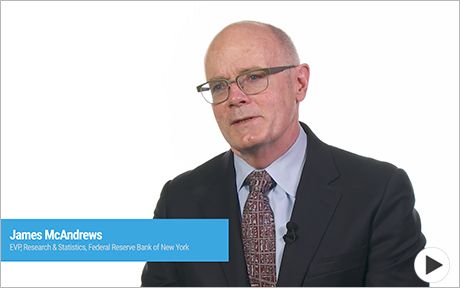
Monitoring the economic and financial landscape is a difficult task. Part of the challenge stems from simply having access to data. Even if this requirement is met, there is the issue of identifying the key economic data releases and financial variables to focus on among the vast number of available series. It is also critical to be able to interpret movements in the data and to know their implications for the economy. Since last June, New York Fed research economists have been helping on this front, by producing U.S. Economy in a Snapshot, a series of charts and commentary capturing important economic and financial developments. At today’s Economic Press Briefing, we took reporters covering the Federal Reserve through the story of how and why the Snapshot is produced, and how it can be helpful in understanding the U.S. economy.
May 2, 2016
Lower Oil Prices and U.S. Economic Activity

After a period of stability, oil prices started to decline in mid-2015, and this downward trend continued into early 2016.
Posted at 7:00 am in Exports, Financial Markets, International Economics, Macroeconomics | Permalink
April 15, 2016
Just Released: The New York Fed Staff Forecast—April 2016
Today, the Federal Reserve Bank of New York (FRBNY) is hosting the spring meeting of its Economic Advisory Panel (EAP). As has become the custom at this meeting, the FRBNY staff is presenting its forecast for U.S. growth, inflation, and the unemployment rate. Following the presentation, members of the EAP, which consists of leading economists in academia and the private sector, are asked to critique the staff forecast. Such feedback helps the staff evaluate the assumptions and reasoning underlying its forecast as well as the forecast’s key risks. The feedback is also an important part of the forecasting process because it informs the staff’s discussions with New York Fed President William Dudley about economic conditions. In that same spirit, we are sharing a short summary of the staff forecast in this post; for more detail, see the FRBNY Staff Outlook Presentation from the EAP meeting on our website.
April 12, 2016
Just Released: Introducing the New York Fed Staff Nowcast

What is the weather today? You don’t need to be a meteorologist to answer this question. Just take a look outside the window. Macroeconomists do not have this luxury. The first official estimate of GDP this quarter will not be published until the end of July. In fact, we don’t even know what GDP was last quarter yet! But while we wait for these crucial data, we float in a sea of information on all aspects of the economy: employment, production, sales, inventories, you name it. . . . Processing this information to figure out if it is rainy or sunny out there in the economy is the bread and butter of economists on trading desks, at central banks, and in the media. Thankfully, recent advances in computational and statistical methods have led to the development of automated real-time solutions to this challenging big data problem, with an approach commonly referred to as nowcasting. This post describes how we apply these techniques here at the New York Fed to produce the FRBNY Nowcast, and what we can learn from it. It also serves as an introduction to our Nowcasting Report, which we will update weekly on our website starting this Friday, April 15.
April 11, 2016
Just Released: U.S. Economy in a Snapshot—More Data for More Charts

We launched the U.S. Economy in a Snapshot in June 2015 to provide interested readers with a monthly update of current economic and financial developments. Combining charts and summary points, the packet covers a range of topics that include labor and financial markets, the behavior of consumers and firms, survey responses, and the global economy.
March 25, 2016
Happy Fifth Birthday, LSE!
When we launched our research blog five years ago this week, we didn’t expect to set any internet traffic records while writing about economics. Still, we saw that a blog would be a good way to build familiarity with our research and policy analysis, and to share the expertise of our staff when it’s relevant to issues in the public eye. As I said back at the birth, our goal was to deliver “lively, clear, and analytically sound” posts and, in that, I think we have succeeded.
March 21, 2016
What Tracks Commodity Prices?

Various news reports have asserted that the slowdown in China was a key factor driving down commodity prices in 2015. It is true that China’s growth eased last year and, owing to its manufacturing-intensive economy, that slackening could reasonably have had repercussions for commodity prices. Still, growth in Japan and Europe accelerated in 2015, with the net result that global growth was fairly steady last year, casting doubt on the China slowdown explanation. An alternative story relies on the strong correlation between the dollar and commodity prices over time. A simple regression shows that both global growth and the dollar track commodity prices, and in this framework, it is the rise of the dollar that captures last year’s drop in commodity prices. Thus a forecast of stable global growth and an unchanged dollar suggests little change in commodity prices in 2016.
Posted at 7:00 am in Forecasting, International Economics, Macroeconomics | Permalink | Comments (3)
January 13, 2016
Fundamental Disagreement: How Much and Why?
Richard K. Crump and Stefano Eusepi Everyone disagrees, even professional forecasters, especially about big economic questions. Has potential output growth changed since the financial crisis? Are we bound for a period of “secular stagnation”? Will the European economy rebound? When is inflation getting back to mandate-consistent level? In this post, we document to what degree […]
January 5, 2016
Who is Driving the Recent Decline in Consumer Inflation Expectations?
The expectations of U.S. consumers about inflation have declined to record lows over the past several months.
December 3, 2015
The FRBNY DSGE Model Meets Julia
Marco Del Negro, Marc Giannoni, Pearl Li, Erica Moszkowski, and Micah Smith We have implemented the FRBNY DSGE model in a free and open-source language called Julia. The code is posted here on GitHub, a public repository hosting service. This effort is the result of a collaboration between New York Fed staff and folks from […]
 RSS Feed
 Follow Liberty Street Economics
